Saturday, February 3, 2018

February 2018

Saving Monticello: The Newsletter
The latest about the book, author events, and more
Newsletter Editor - Marc Leepson
Volume XV, Number 2                                                                      February 1, 2018

The study of the past is a constantly evolving, never-ending journey of discovery.” – Eric Foner

THE KITCHEN: The latest archaeological news at Monticello came late last year when a dig in the South Pavilion cellar discovered portions of several stoves used by Jefferson’s enslaved French-trained chef James Hemings.

An excellent, well-illustrated article in Live Science (http://bit.ly/MontKitchen) reveals what happened when researchers started digging in a space in the cellar that had been used as a visitors’ bathroom for more than fifty years before the Thomas Jefferson Foundation decided to restore the cellar to what it was in Jefferson’s time.

The article notes that the archaeological team also found a trove of other artifacts, including pottery and glass bottle fragments, animal bones, and toothbrushes, along with the original brick kitchen floor, and pieces of the fireplace and four stew stoves.


The photo above, from the Thomas Jefferson Foundation, shows the recreated stew stoves.
James Hemings, who was born in 1765, was among the scores of slaves owned by Thomas Jefferson’s father-in-law John Wayles. James’ mother was Elizabeth (Betty) Hemings. It’s all but certain that John Wayles was his father—as well as the father of all of James Hemings’ five full siblings, including his younger sister Sally. That meant that those Hemings siblings also were Thomas Jefferson’s wife Martha’s half brothers and sisters.

Jefferson took James (and Sally) Hemings to Paris in August of 1784, when he served as U.S. Minister (Ambassador) to France, which is where James learned to cook. He was freed by Jefferson in 1796, seven years after they returned from France.

I do not mention James Hemings in Saving Monticello, as he had left Monticello well before the story I tell begins—and he died in 1801. Nor do I mention his famed younger sister Sally Hemings for the same reason. The only time the name “Hemings” comes up in my book is when I discuss Thomas Jefferson’s death in 1826 and his will.

In it, Jefferson left his walking staff to James Madison. He gave watches to each of his grandchildren, and donated his books to the University of Virginia—although they later were sold, instead, to raise cash.

A codicil in the will granted freedom to five of Monticello’s enslaved people who had learned trades, all of whom were members of the Hemings family: Joe Fossett, Burwell Culbert, and John, Madison and Eston Hemings. Burwell Culbert, who was Jefferson’s butler and main household servant, also received $300. All five newly free men were also given houses.

For more info on James Hemings, take a look at the Foundation’s excellent sketch of his life at http://bit.ly/2JamesHemings

HIS THREE DAUGHTERS: Another member of the Hemings family is one of the three women profiled in the just-published book, Jefferson’s Daughters: Three Sisters, White and Black in a Young America (Ballantine Books, 425 pp. $28, by Katherine Kerrison, a Villanova University U.S. History Professor.

Image result for jefferson's daughters

The book is a combined biography of Thomas and Martha Jefferson’s two daughters, Martha, whom Jefferson called “Patsy” (1772-1836), and Maria (1778-1804), known as “Polly”—along with Kerrison’s reconstruction of the life of Harriet Hemings, who was born in 1801, the daughter of Sally Hemings and Thomas Jefferson. The Thomas Jefferson Foundation and most historians believe that Jefferson and Sally Hemings had a total of six children following the death of his wife Martha in 1782. Harriet was the eldest.

Harriet Hemings was given her freedom at age 21. She left Monticello, and moved to Washington, D.C. in 1822, four years before Jefferson’s death. She never saw her mother or father after that.

According to Kerrison’s book, Harriet Hemings (who was seven-eighths white) married a white man in Washington and had several children. She and her children lived as white people.

Kerrison’s life stories of Martha and Maria, Jefferson’s white daughters, includes their time with him in Paris where fourteen-year-old Sally Hemings served as Maria’s companion. You can read the New York Times review of the book by Mary Beth Norton at http://bit.ly/DaughtersReview  and Kerrison’s recent essay on the topic in the Washington Post at http://bit.ly/JeffDaughters

EVENTS: Here’s a rundown on my February speaking events. For info on my new book, Ballad of the Green Beret, please go to http://bit.ly/GBBallad
·         Saturday, February 10  – Talk on Saving Monticello and book signing for the Oak Hill Chapter of the U.S. Daughters of 1812 in McLean, Virginia
·         Sunday, February 25 - Talk on Ballad of the Green Beret for the Mayflower Society of Washington, D.C., in Vienna, Virginia

Image result for marc leepson

If you’d like to arrange an event for Saving Monticello—or for any of my other books, including Ballad of the Green Beret—please email me at marc527psc@aol.com

For details on other upcoming events, go to http://leepsoncalendar.blogspot.com

GIFT IDEASWant a personally autographed, brand-new paperback copy of Saving Monticello? Please e-mail me at Marc527psc@aol.com I also have a few as-new, unopened hardcover copies.
Or go to marcleepson.com/signedbooks.html to order copies through my local bookstore, Second Chapter Books in Middleburg, Virginia. We also have copies of Desperate Engagement, Flag, Lafayette, and What So Proudly We Hailed, and Ballad of the Green Beret.  


Thursday, January 4, 2018

January 2018

Saving Monticello: The Newsletter
The latest about the book, author events, and more
Newsletter Editor - Marc Leepson

Volume XV, Number 1                                                                      January 1, 2018

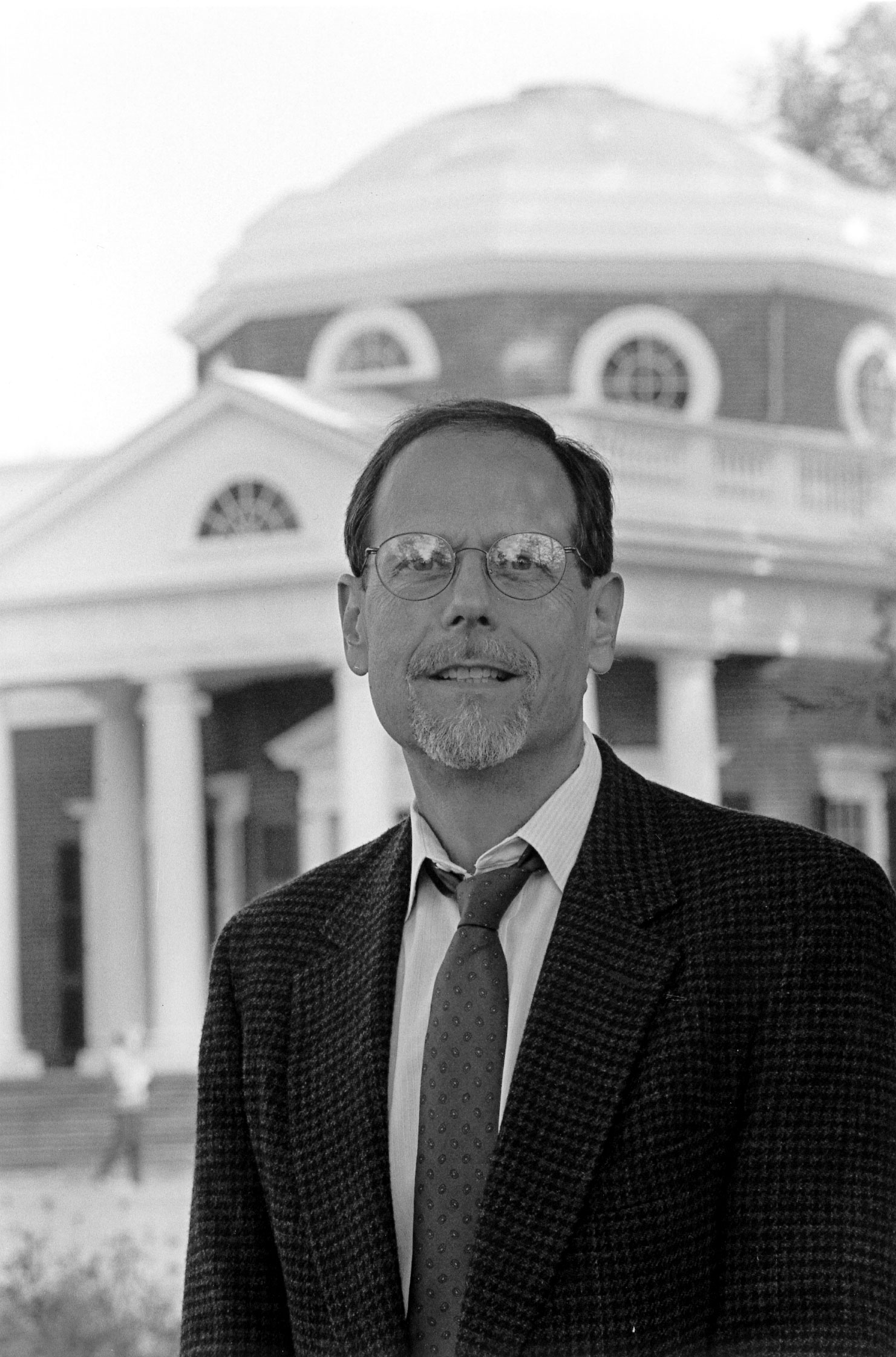
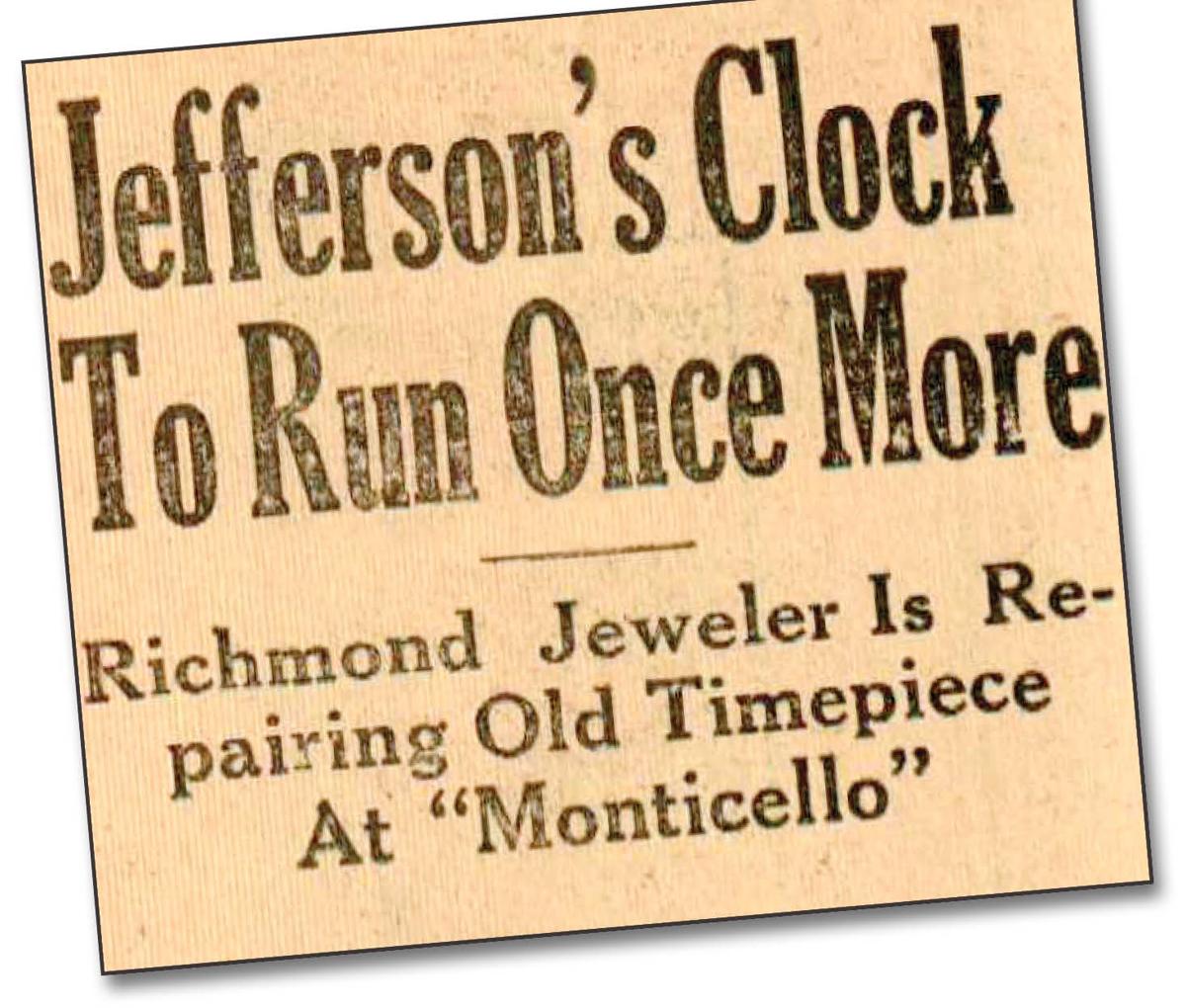
ONE GREAT CLOCK: A little over eighty years ago, on December 15, 1937, to be exact, the Charlottesville Daily Progress newspaper reported that a Richmond jewleler named Otto Frederick Ostergren had repaired Thomas Jefferson’s famed seven-day clock. Ostergren, the article said, got the clock working properly for the first time since the late 1850s during the time when Uriah Phillips Levy owned Monticello

“Jefferson may have been a novice, but he evidently knew enough about clocks to design a good one that had but one major fault,” the newspaper reported in 1937. “This fault was in the striking mechanism, which if it ever got out of order, would stop the entire complicated apparatus. As a result, the great clock has run but a third of the time during the 130 years it has been at Monticello.”

Ostergren, the article went on to say, simplified the clock’s mechanism “to take care of the major difficulties.” Once more, it said, “the people of Charlottesville will hear the doleful tolling of the hours as they did back in the days when the clock was running and the striking hammer resounded on the huge disk placed up in the roof. At times, the tolling would continue for hours, and then someone would have to climb out on the roof and set the apparatus right.”

Dec 15

Jefferson designed the one-of-a-kind clock, and sent his plans to a Philadelphia clockmaker named Peter Spruck to build. Spruck created it with the help of his apprentice Robert Leslie in 1793. It wasn’t installed in Monticello’s Entrance Hall, though, until 1805 when Jefferson was president. The Great Clock has remained there ever since—one of only a handful of items that has been in Monticello continuously from Jefferson’s time to today.

I first mention the Great Clock in Saving Monticello in the section on the brief (1831-34) ownership of Monticello by the eccentric Charlottesville pharmacist James Turner Barclay. He bought the place from Jefferson’s daughter Martha and her son Thomas Jefferson Randolph after they had sold virtually all the furniture and furnishings in the years following Jefferson’s death in 1824.

According to his daughter, Barclay bought special tools to repair the clock, which, she said, had been broken for “many years.”

Barclay signed a contract to sell Monticello to Uriah Levy in 1834, but the sale was delayed for two years when the parties had a dispute over what exactly would convey to Levy. The contract called for Levy to receive Monticello and its “appurtenances” and 230 acres of land. Barclay would keep the houses’ valuable pier mirrors and the seven-day clock.

However, a land survey revealed that Barclay had sold off all but 218 of Monticello’s acres. So Levy asked Barclay to annul the initial contract, which he did. The parties wrote a new one in which Barclay dropped the price to $2,500 and, according to Levy, threw in the mirrors and clock. Barclay disagreed with that and legal wrangling (a lawsuit and a counter suit) ensued. It ended in 1836 when the parties settled the lawsuits and Uriah Levy took possession of the house—including the Great Clock and the mirrors.

Image result for daily progress monticello clock jefferson

Uriah Levy, a U.S. Navy lieutenant when he bought Monticello, spent most of his time at sea, in the 1850s. His caretaker at Monticello, Joel Wheeler, lived in and ran Monticello, but didn’t exactly maintain the place well.

That included the Great Clock, which was in the mid-1850s was unused and in bad shape. “Dust and rust corrode the silent wheels,” a visitor reported in 1856. According to the Richmond clockmaker Frederick Ostergren the Great Clock would stay in that condition until 1937.

You can read a full description of the Great Clock on the Thomas Jefferson Foundation’s online Thomas Jefferson Encyclopedia at http://bit.ly/JeffGreatClock

To read the Daily Progress article, go to http://bit.ly/ProgressClock

EVENTS: Here are my January speaking events. For info on my new book, Ballad of the Green Beret, please go to http://bit.ly/GBBallad
  • ·       Thursday, January 4 – Talk on Saving Monticello and book signing for the Leesburg Rotary Club, Leesburg, Virginia
  • ·       Tuesday, January 9 – 12:30 p.m. talk on Francis Scott Key and “The Star-Spangled Banner” at the Jewish Community Center of Northern Virginia. Open to the public. For info, call 703-537-3068 or go to http://bit.ly/jccnvKey
  • ·       Thursday, January 11 – Talk on Flag: Saving Monticello and book signing at the monthly meeting of the Falls Church (Va.) DAR chapter.
  • ·       Thursday, January 25 – 1:00 p.m. talk on What So Proudly We Hailed: Francis Scott Key: A Life and book signing for Montgomery County (Md.) Oasis, 7125 Democracy Blvd. Bethesda. Open to the public. For info, call 301-469-6800, ext. 211.

 Image result for marc leepson

If you’d like to arrange an event for Saving Monticello—or for any of my other books, including Ballad of the Green Beret—please email me at marc527psc@aol.com

For details on other upcoming events, go to http://leepsoncalendar.blogspot.com

GIFT IDEASWant a personally autographed, brand-new paperback copy of Saving Monticello? Please e-mail me at Marc527psc@aol.com I also have a few as-new, unopened hardcover copies.

Or go to marcleepson.com/signedbooks.html to order copies through my local bookstore, Second Chapter Books in Middleburg, Virginia. We also have copies of Desperate Engagement, Flag, Lafayette, and What So Proudly We Hailed, and Ballad of the Green Beret.   
Wednesday, December 6, 2017

December 2017

Saving Monticello: The Newsletter
The latest about the book, author events, and more
Newsletter Editor - Marc Leepson

Volume XIV, Number 12                                                                   December 1, 2017

THE STORY: Simon Schama, the acclaimed Columbia University professor, may be best known as the voice of dozens of BBC, PBS, and History Channel documentaries. That includes the monumental five-part “The Story of the Jews,” a sweeping, 3,000-year history, which Schama wrote and narrated for BBC and PBS in 2013.

Schama’s latest book is The Story of the Jews, Volume Two: Belonging: 1492-1900 (Harper Collins, 800 pp.), which came out in October. It is the second of what will be three volumes that cover the same territory as Schama did in the documentary.


The book is “an engaging and electrifying read by a skilled literary craftsman, cultural historian and tour guide,” the novelist and essayist Thane Rosenbaum wrote in his Washington Post review. The Story takes us to “such far-flung places,” Rosenbaum wrote, such as Venice, London, Paris, Istanbul, Jerusalem, and San Francisco.

In the earlier volume, the documentary, and in the new book Schama tells the stories of well-known people such as Baruch Spinoza, Alfred Dreyfus, and Theodor Herzl. But he also gives us “an all-star team of largely unsung Jewish heroes,” as Rosenbaum put it, “who inject humanity and spunk into what might otherwise have been morbid tales of endless persecution.”

This largely unsung group includes David Ha-Reuveni, a 16th century European traveler and mystic; the 18th-century British boxer Daniel Mendoza; the mid-16th century Italian showman Leone de’Sommi; the mid-17th century Chinese general Chao Ch’eng; the pioneering mid-18th century French physician Jacob Rodrigues Pereire; and the mid-19th century American actress, painter, and poet Adah Isaac Menken.

Plus—I am happy to say—Schama tells the story of the one and only Uriah Phillips Levy in the book. He recounts what I wrote about in Saving Monticello: UPL’s stewardship of Monticello and includes the story of the statue of Thomas Jefferson that Levy commissioned in 1833, which now is in Statuary Hall in the U.S. Capitol’s Rotunda.

AMERICAN HERITAGE: When I started doing the research for the 1997 Preservation magazine article on the Levys and Monticello (which would become the progenitor of Saving Monticello), I discovered an article on that exact subject by Annabelle Prager in the February/March 1978 issue of American Heritage magazine.
The article proved to be well researched and accurate, although the writing was a tad too flowery in places and the tone a bit too hagiographic. It was also too vague on the misrepresentations made by Maude Littleton in her 1909-1914 campaign to take Monticello from Jefferson Levy.
Nevertheless, overall Ms. Prager did a fine job telling the Levys’ Monticello story.
To wit: “Visitors to Monticello today, taking in its handsome lawns,” she wrote, may not know that “Monticello was saved from ignominious ruin because it had the good fortune to fall into the hands of men who believed that its builder, Thomas Jefferson, was the greatest of all Americans.
“To these owners—first, Uriah Phillips Levy, and later his nephew, Jefferson Monroe Levy—Monticello was a shrine.”
I just discovered that the article is on line, I believe, for the first time. You can read it at http://bit.ly/AHMonticello


EVENTS: Here’s a rundown on my December speaking events. For info on my new book, Ballad of the Green Beret, please go to http://bit.ly/GBBallad
·         Monday, December 4  – 4:00 p.m. Eastern appearance on the Mike Slater Show, AM 760, San Diego on Lafayette: Idealist General.
·         Tuesday, December 5 -  Release of “Civics 101” Podcast by New Hampshire Public Radio on the U.S. Flag Code and my book Flag: An American Biography. Go to http://bit.ly/Civics101Flag
·         Friday, December 15 – 3:00 p.m. talk on Flag: An American Biography and book signing at Arbor Terrance retirement community, 1100 Dranesville Rd., Herndon, Virginia. Free and open to the public. To make a reservation and for more info, call
703-956-6311. 

If you’d like to arrange an event for Saving Monticello—or for any of my other books, including Ballad of the Green Beret—please email me at marc527psc@aol.com

For details on other upcoming events, go to http://leepsoncalendar.blogspot.com

GIFT IDEASWant a personally autographed, brand-new paperback copy of Saving Monticello? Please e-mail me at Marc527psc@aol.com I also have a few as-new, unopened hardcover copies.
Or go to marcleepson.com/signedbooks.html to order copies through my local bookstore, Second Chapter Books in Middleburg, Virginia. 

We also have copies of Desperate Engagement, Flag, Lafayette, and What So Proudly We Hailed, and Ballad of the Green Beret.  


Sunday, November 5, 2017

November 2017


Saving Monticello: The Newsletter
The latest about the book, author events, and more
Newsletter Editor - Marc Leepson

Volume XIV, Number 11                                                                   November 1, 2017

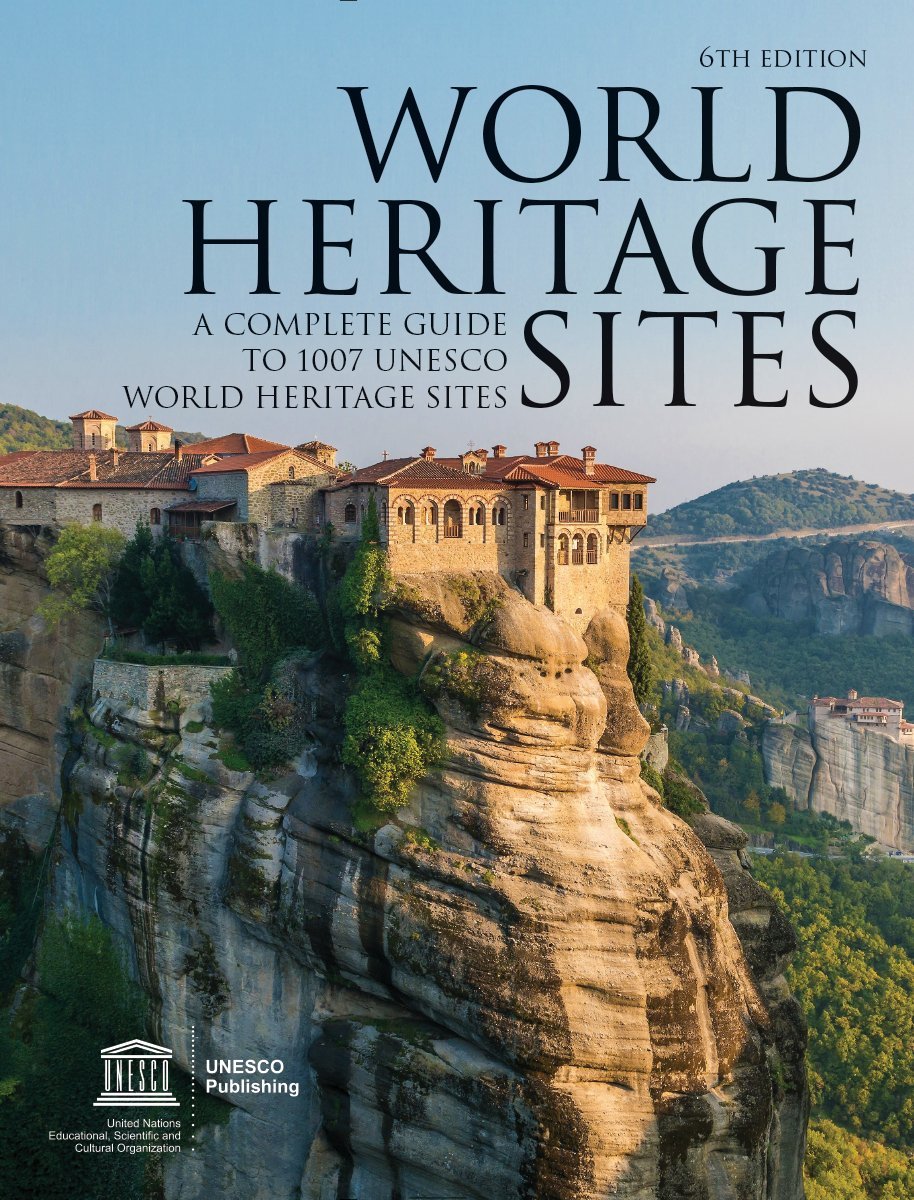
WORLD HERITAGE: Can you name the only residential structure in the United States listed as an official UNESCO World Heritage Site? Hint: It’s also the only presidential home in the U.S. on the list.
No shock to readers of this newsletter that the singular site is Thomas Jefferson’s Monticello. Jefferson’s “Essay in Architecture” was named to UNESCO prestigious list of worldwide sites in 1987, along with another of his architectural achievements, the University of Virginia’s original grounds, what Jefferson called his “Academical Village.”
UNESCO—the United Nations Educational, Scientific and Cultural Organization—began the World Heritage site program in 1972. Since then, scores of landmarks—mostly geographic areas—across the globe have been added to the list. World Heritage site buildings are chosen, UNESCO says, because of their “architecture, their homogeneity or their place in the landscape.” They also must be “of outstanding universal value from the point of view of history, art or science,” represent “a masterpiece of human creative genius,” and exhibit “an impor­tant interchange of human values.”


All World Heritage sites are deemed “of outstanding universal value.” They include—to name a few—the Statue of Liberty, Independence Hall, and Yellowstone, Everglades, Grand Canyon, and Mesa Verde National Parks in this country; Machu Picchu in Peru; Mount Kenya National Park; the Historic Center of Florence in Italy; the Taj Mahal; the Acropolis in Athens, Chartres Cathedral and Mont St. Michel in France; the Great Wall in China, and the Sydney Opera House; and Monticello. All are deemed by UNESCO as sites for the “international community” to protect.

Why is UNESCO in the news now? You may have heard that on October 12 the White House announced that the United States will withdraw from UNESCO at the end of 2018. The reason: what the present presidential administration deems its “anti-Israel bias,” along with the fact that UNESCO is in need of “fundamental reform.” The nation of Israel also announced it was leaving UNESCO.

Not surprisingly, the news of pending U.S. abandonment of UNESCO did not go over well at the Thomas Jefferson Foundation, which owns and operates Monticello. According to an article in the Charlottesville Daily Progress, the Foundation was “disappointed” with the announcement.

“This decision will have no impact on Monticello’s inscription on the World Heritage Site List, nor on our commitment to jointly host with UNESCO an international symposium on the interpretation of slavery, in Charlottesville, in 2018,” the foundation said in a statement.

“UNESCO is a global steward of world culture that bridges, celebrates and protects the rich diversity of human creative genius,” the foundation also pointed out. 

For more, go to http://bit.ly/DProgress


EVENTS: Here’s a rundown on my November speaking events, including talks on Saving Monticello. For info on my new book, Ballad of the Green Beret, please go to http://bit.ly/GBBallad

·         Tuesday, November 14  – Talk on Saving Monticello and book signing for the Colonial Daughters’ Ancient Planters Chapter meeting Fair Oaks, Virginia
·         Thursday, November 16 - Talk on What So Proudly We Hailed: Francis Scott Key a Life and book signing at the monthly meeting of the Stone Bridge DAR Chapter in Ashburn, Virginia
·         Tuesday, November 28  – Talk on Saving Monticello and book signing at the monthly meeting of the George Mason DAR Chapter, Springfield, Virginia


If you’d like to arrange an event for Saving Monticello—or for any of my other books, including Ballad of the Green Beret—please email me at marc527psc@aol.com

For details on other upcoming events, go to http://leepsoncalendar.blogspot.com

GIFT IDEASWant a personally autographed, brand-new paperback copy of Saving Monticello? Please e-mail me at Marc527psc@aol.com I also have a few as-new, unopened hardcover copies.
Or go to marcleepson.com/signedbooks.html to order copies through my local bookstore, Second Chapter Books in Middleburg, Virginia. We also have copies of Desperate Engagement, Flag, Lafayette, and What So Proudly We Hailed, and Ballad of the Green Beret.  
Thursday, October 5, 2017

October 2017

Saving Monticello: The Newsletter
The latest about the book, author events, and more
Newsletter Editor - Marc Leepson

Volume XIV, Number 10                                                                   October 1, 2017

HAPPY ANNIVERSARY: The University of Virginia begins the official commemoration of its 200th anniversary on Friday, October 6, when some 20,000 people are expected to gather for a Bicentennial Launch Celebration on the Lawn. That event will mark the 200th anniversary of the laying of the University’s cornerstone at Pavilion VII on the Lawn, the centerpiece of the Thomas Jefferson-designed University Grounds.


Thomas Jefferson had begun planning what he called his “academical village” several years earlier. He already had plans in mind when, in 1716, the Virginia General Assembly granted a charter for what was then known as Central College in Albemarle County. Jefferson was elected to the school’s Board of Visitors.

The following year the Board met for the first time and chose a location for the College. Then, on October 6, 1717, masons laid the foundation for the college, which became known as The University of Virginia the following year.

Construction of the buildings on the Grounds (which is not called a “campus”) went on for the next eight years. That included the Lawns’ ten pavilions, which were designed to be professors’ residences and lecture halls, and today house the University’s top students and faculty members and their families. The Grounds—and Monticello—are UNESCO World Heritage Sites, and the Rotunda is a U.S. National Historic Landmark District.


Events throughout the weekend will commemorate many aspects of the University’s founding. There will be lectures, exhibits, concerts, and the dedication of a Memorial to Enslaved Laborers (artist’s rendition, below). It will commemorate the contributions of the enslaved people who did most of the heavy lifting work two centuries ago.


Enhanced security will be set up on every entrance to the Lawn and at other venues. For more info, go to https://bicentennial.virginia.edu


THE BEAST:  An article posted October 1 on the Daily Beast web site tells a story familiar to anyone who has read Saving Monticello. Entitled “How America’s First Jewish Commodore Saved Monticello,” the article by McGill University history professor Gil Troy lightly goes over the life of Uriah Phillips Levy, highlighting the anti-Semitism he faced in the U.S. Navy, along with his stewardship of Thomas Jefferson’s Monticello.

It seems to have been inspired by “Who Saved Monticello? A Jewish Family,” the article by Rachel Siegel that appeared in The Washington Post in August following the events in Charlottesville in August. I wrote about that excellent article in last month’s newsletter as Siegel had interviewed me for it and quoted me in it. You can read it online at  http://bit.ly/MonticelloSaving


Professor Troy did not contact me for his article. He borrowed from the WP piece, as well as from other good sources, including Saving Monticello, which is not mentioned in the body of the article—although it is listed at the end of the article “for further reading,” along with the untrustworthy 1963 UPL bio, Navy Maverick by Donovan Fitzpatrick and Saul Saphire.

The Daily Beast article was mainly accurate, although I take exception to Troy’s claim that Uriah Levy “remains unknown.” Just Google his name and you’ll see how un-unknown he is.

Other missteps: Troy repeats the unproven story the UPL came back from his stint as a ship’s cabin boy at age thirteen “to be bar mitzvahed.” That’s an all-but-certain made-up tale told in Navy Maverick. That book is also the source for the misinformation that Troy repeats that UPL was held at “brutal Dartmoor prison” after his ship was sunk in the English Channel during the War of 1812. Ira Dye proved that Levy never was held in Dartmoor while doing the research for his excellent 2006 military biography, Uriah Levy: Reformer of the Antebellum Navy.

Also, Uriah Levy was not court-martialed in 1816, as Troy writes, after killing another Navy officer in a duel. Since the duel in question took place off ship, Levy was tried in a Philadelphia County Court—not in a military court martial—and found not guilty.

Also, in 1857 Levy wasn’t “barred from the Navy,” as Troy says. He was riffed, along with a good number of other officers.

Also, a letter Levy allegedly wrote quoted in Navy Maverick that Troy cites—that UPL admired Thomas Jefferson because he did so “much to mold our Republic in a form in which a man’s religion does not make him ineligible for political or governmental life”—has never been found.

As I wrote in an endnote in Saving Monticello, those words are the only words attributed to Uriah Levy about his thoughts about Thomas Jefferson and are almost too good to be true. In Navy Maverick Fitzpatrick and Saphire provided no information about the whereabouts of the letter, nor did they give the letter’s exact date. Attempts by myself, Ira Dye, and other researchers to find the letter have been to no avail.  

You can read The Beast article at http://bit.ly/UPLarticle

EVENTS: Here’s a rundown on my October speaking events, including a talk on Saving Monticello and several on my new book, Ballad of the Green Beret. For info on the latter, please go to http://bit.ly/GBBallad


·         Tuesday, October 17  – Talk on Ballad of the Green Beret and book signing for the Special Forces Association Chapter XI in Falls Church, Virginia
·         Thursday, October 19 - Talk on Ballad of the Green Beret and book signing at the monthly meeting of Vietnam Veterans of America’s Northern Virginia Chapter 227 in Fairfax, Virginia
·         Sunday, October 22 – 2:00 p.m. talk on Saving Monticello and book signing for the Fauquier County (Va.) Public Library at the John Parton Payne Building, 2 Courthouse Square, Warrenton, Virginia. Free and open to the public.
·         Tuesday, October 24  – 7:00 p.m. talk on Ballad of the Green Beret and book signing at the C. Burr Arts Library, 110 E Patrick St, Frederick, Maryland. Sponsored by the Curious Iguana bookstore in Frederick. Free and open to the public. For info, call 301-600-1630
·         Tuesday, October 26 – 6:30 p.m talk on Ballad of the Green Beret and book signing. At the Montclair Community Library, 5049 Waterway Dr., Dumfries, Va. Free and open to the public. For more info, call 703-792-8749.

If you’d like to arrange an event for Saving Monticello—or for any of my other books, including Ballad of the Green Beret—please email me at marc527psc@aol.com

For details on other upcoming events, go to http://leepsoncalendar.blogspot.com


GIFT IDEASIf you would like a personally autographed, brand-new paperback copy of Saving Monticello, e-mail me at Marc527psc@aol.com I also have a few as-new, unopened hardcover copies. Or go to marcleepson.com/signedbooks.html to order copies through my local bookstore, Second Chapter Books in Middleburg, Virginia. We also have copies of Desperate Engagement, Flag, Lafayette, and What So Proudly We Hailed, and Ballad of the Green Beret.   

Saturday, September 2, 2017

September 2017

Saving Monticello: The Newsletter
The latest about the book, author events, and more
Newsletter Editor - Marc Leepson

Volume XIV, Number 9                                                                     September 1, 2017

CHARLOTTESVILLE:  Back in the spring my wife Janna and I planned a trip to Charlottesville, one of my favorite places on earth, to see Lyle Lovett. He was playing (with his Large Band) on Wednesday evening, August 16, at the Pavilion on the downtown mall.

We’d done it before and always had great times, eating dinner downtown beforehand, seeing the concert, spending the night, and then driving home to Northern Virginia in the morning. After we learned of the horrific events of Saturday, August 12, we didn’t know what to expect when we arrived.

To our surprise (and delight) when we drove into town at around 3:00 on Wednesday afternoon things seemed calm and normal. Still, the concert was just two short blocks from where the unspeakable happened, and it was sobering to walk the downtown mall fourdays afterward.

The good news is that the concert was great, with Lyle Lovett expressing his admiration for the people of Charlottesville and performing four gospel songs (with an added church choir from Richmond) all of which resonated poignantly with everyone in the crowd.


I took the picture above of the Rotunda along the Lawn, the Thomas-Jefferson designed space on the grounds of the University of Virginia, at around 6:30 a.m. on Thursday during my morning walk. As I walked through downtown C’ville and the grounds, I couldn’t help but breathe deeply and appreciate the stillness and calm—and at the same time recall that just five days earlier men wearing Nazi regalia marched in my steps shouting venomous racial and anti-Semitic slurs. And that one of them killed a woman right there on the downtown mall.  

Alan Zimmerman, the president of Charlottesville’s Congregation Beth Israel, which is two blocks from the downtown mall, described the scene in front of the temple in a letter to congregants. Here are excerpts:

“On Saturday morning, I stood outside our synagogue with the armed security guard we hired after the police department refused to provide us with an officer during morning services. … Forty congregants were inside. Here’s what I witnessed during that time.

“For half an hour, three men dressed in fatigues and armed with semi-automatic rifles stood across the street from the temple. Had they tried to enter, I don’t know what I could have done to stop them, but I couldn’t take my eyes off them, either. Perhaps the presence of our armed guard deterred them. Perhaps their presence was just a coincidence, and I’m paranoid. I don’t know.

Several times, parades of Nazis passed our building, shouting, ‘There’s the synagogue!’ followed by chants of ‘Seig Heil’ and other anti-Semitic language. Some carried flags with swastikas and other Nazi symbols.”

The entire message is on line at http://bit.ly/BethIsraelCville


THE WASHINGTON POST:  The morning before we left for Charlottesville, I had an email from Rachel Siegel, a reporter at the Washington Post. She said she wanted to ask me some questions about the Levy family, Monticello, anti-Semitism, and Charlottesville. I told her I’d be happy to do an interview, and suggested she get her hands on Saving Monticello, which she did.

As she was on deadline, I took the call in the car driving to C’ville. We spoke for a good half hour. She had gone through the book and asked good questions.

The following Wednesday her excellent article, headlined “Neo-Nazis Rallied Around Jefferson’s Statue. But it Was a Jewish Family that Saved Monticello,” appeared in the online Post; the following day the article was on the front page of the print edition’s Metro page with a slightly different headline: “Who Saved Monticello? A Jewish Family.”

Rachel Siegel did a fine job. The quotes she used from me were accurate and in context. You can read the article at http://bit.ly/MonticelloSaving


LEVY OPERA HOUSE: The night of the concert on our way to dinner, we saw the Robert E. Lee statute (all was quiet there) and then walked a few blocks up to High Street with our Charlottesville friends Amoret and Mike Powers and over to take a look at the Levy Opera House 350 Park, near the corner of Park and High Streets.

Jefferson Levy, an extremely active real estate and stock speculator, acquired the building in 1887, eight years after he had bought out the other Uriah Levy heirs and gained control of Monticello. The Opera House—Charlottesville’s former City Hall—was his first significant purchase of property in the city. He would buy (and sell) more than a few other buildings in town in the coming decades.

When Levy bought the large, three-story Georgian style brick structure built in 1852, it was still known as Town Hall. The building was used as a gathering place for local groups, traveling, and touring theatrical companies. By the mid-1880s, though, it had fallen into disuse.

As I wrote in Saving Monticello, Jefferson Levy remodeled Town Hall and in 1888 renamed it the Levy Opera House. He enlarged the stage and put in a new orchestra pit with dressing rooms below, inclined the floor to improve sight lines, and installed a horseshoe-shaped gallery, new opera chairs and two boxes on the sides of the stage.

The Levy Opera House hosted the first symphony orchestra that played in Charlottesville, the Boston Symphony, which came to town in 1891. That year Jefferson Levy leased the Opera House to Jacob (“Jake”) Leterman and Ernest Oberdorfer, sons of the founders of Charlottesville’s German Reform synagogue. Leterman and Oberdorfer brought in other symphony orchestras, minstrel shows, and various types of theatrical productions.

In 1907, Levy leased the building to the Jefferson School for Boys, a small boarding and day prep school, for $400 a year. An addendum to the lease stipulated that if any theatrical performances were given in the Opera House, it “shall be advertised as the Levy Opera House,” and that Jefferson Levy retained the right to his box there. The school moved out in 1912.

Two years later Levy sold the building, and it was subdivided into apartments. It was subsequently remodeled into office space.


EVENTS: Here’s a rundown on my September speaking events, including talks on Saving Monticello and my new book, Ballad of the Green Beret. For info on Ballad, please go to http://bit.ly/GBBallad


·    
S   Saturday, September 9 – Talk on Ballad of the Green Beret and book signing at the monthly meeting of DAR Providence Chapter, Fairfax Station, Virginia
·  Tuesday, September 12 – Leading a 7:00 p.m. discussion on “World War I and America” at the George C. Marshall International Center in Leesburg, Virginia. Sponsored by the Marshall House and the Loudoun County Public Library. Open to the public. For info, call 703-777-1301
·   Thursday, September 14 – Washington Metropolitan Oasis Center, Bethesda, Maryland, 1:00 p.m. talk on Saving Monticello and book signing. For info, call 301-469-6800.
·    Thursday, September 28 – Arlington Central Library, Arlington, Virginia. 7:00 p.m. talk on Ballad of the Green Beret and book signing. 1015 No. Quincy St. Arlington. Free and open to the public. For more info, call 703-228-5990 or go to http://bit.ly/2BalladArlington


If you’d like to arrange an event for Saving Monticello—or for any of my other books, including Ballad of the Green Beret—please email me at marc527psc@aol.com

For details on other upcoming events, go to http://leepsoncalendar.blogspot.com


GIFT IDEASIf you would like a personally autographed, brand-new paperback copy of Saving Monticello, e-mail me at Marc527psc@aol.com I also have a few as-new, unopened hardcover copies. Or go to marcleepson.com/signedbooks.html to order copies through my local bookstore, Second Chapter Books in Middleburg, Virginia. We also have copies of Desperate Engagement, Flag, Lafayette, and What So Proudly We Hailed, and Ballad of the Green Beret.