Sunday, September 4, 2016

September 2016

Saving Monticello: The Newsletter

The latest about the book, author events, and more

Newsletter Editor - Marc Leepson


Volume XIII, Number 9                                                                     September 1, 2016

BOOKS:  Thomas Jefferson, as I wrote in Saving Monticello, had the largest private library in America. But Jefferson was forced to sell the entire collection because of his serious fiscal difficulties that escalated greatly his second presidential term ended in 1809. Not long after he came back to Charlottesville that year to live full time at Monticello, Jefferson decided to part with the books to try to pay off his mounting debts.

The sale took place in February of 1815 when Congress, after a spirited debate and by a small majority, agreed to buy Jefferson’s private, 6,500-odd book library for $23,950. He had offered the books to the nation after learning that British troops had burned the congressional library in Washington following the War of 1812 Battle of Bladensburg in August of 1814.


Because of his offer to expand the library, Jefferson has been known as the father of the Library of Congress, which had started in 1800. A 2000 Library of Congress exhibit on Jefferson (photo, above) included a replica of the library Jefferson sold to the nation in 1815. It filled twenty, twelve-foot high bookcases.

Soon after selling the collection, though Thomas Jefferson had seller’s remorse. “I cannot live without books,” he famously wrote to John Adams on June 10, 1815. So the Sage of Monticello began acquiring books for another personal library. When he died in 1824, Jefferson left more than $107,000 in debt to his heirs, along with instructions to donate his new library of some three thousand volumes to the University of Virginia.

But Thomas Jefferson Randolph, working to pay off his grandfather’s enormous debt, sold the bulk of the collection to a Washington, D.C., bookseller in 1829. That same year Jeff Randolph sold a historically important collection of his grandfather's printed books, bound volumes and manuscripts that dealt primarily with Virginia history to the Library of Congress.

Gromacki owns nearly 4,000 of the 6,700 books in Jefferson's Monticello library.
Sadly, in 1851 a fire engulfed much of the Library of Congress, destroying about two-thirds of the Jefferson collection. In recent years, the Library has worked diligently to find replacements. The good news is that the LOC has acquired hundreds of replacement copies from antiquarian book dealers all over the world, mainly through a large 1999 grant from Jerry and Gene Jones (yes, it’s the Jerry Jones who owns the Dallas Cowboys) in its quest to reassemble the collection as it was in 1815.
I just learned that a lawyer in Chicago named Joe Gromacki, has worked for years to assemble copies of every one of the books Jefferson donated to the Library of Congress in 1815 for his own library.  According to an article in Crain’s Chicago Business, Gromacki now owns nearly 4,000 of the books. You can read the whole story at http://bit.ly/TJBookCollection


EVENTS:  We are very close to having a title and the cover design for my next book, the first ever biography of Barry Sadler, “The Ballad of the Green Berets” guy, which will come out in March of next year. I am doing more speaking on my books, including Saving Monticello. Just one event in September, though.
I’ll be doing a talk on the Marquis de Lafayette on Monday, September 26, as part of the Lynchburg College Senior Symposium in Lynchburg, Virginia. Seven others will give talks to the LC seniors in this program, which has the primary theme of “Knowledge, Justice, Leadership and Creativity.” I did at talk on the history of the American flag for the Senior Symposium in the fall of 2008, my daughter Cara’s senior year at Lynchburg.


Please email me if you’d like to arrange an event for Saving Monticello—or for any of my other books, including my Francis Scott Key, biography, What So Proudly We Hailed, and Lafayette: Idealist General, my concise bio of the Marquis de Lafayette—at marc527psc@aol.com For more details on other upcoming events, go to http://bit.ly/SMOnline That’s the “Author Events” page on my website, www.marcleepson.com

Facebook, Twitter: If you’re on Facebook, please send me a friend request. If you’re on Twitter, I’d love to have you as a follower.

Gift IdeasIf you would like a personally autographed, brand-new paperback copy of Saving Monticello, e-mail me at Marc527psc@aol.com Or go to this page of my website: http://marcleepson.com/signedbooks.html to order copies through my local bookstore, Second Chapter Books in Middleburg, Virginia. We also have copies of Desperate Engagement, Flag, Lafayette, and What So Proudly We Hailed.  


Thursday, August 4, 2016

August 2016


Saving Monticello: The Newsletter

The latest about the book, author events, and more

Newsletter Editor - Marc Leepson


Volume XIII, Number 8                                                                     August 1, 2016

LIFE, LIBERTY, AND THE PURSUIT OF HAPPINESS AT THOMAS JEFFERSON’S MONTICELLO: That’s the unoriginal, if accurate, title of a long-ish article by Julee Morrison that appeared in The Huffington Post July 6. In it, Morrison, who writes the Mommy’s Memorandum blog, offers a breezy, upbeat look at the visit she and her family paid to Jefferson’s Essay in Architecture a month ago, along with a little bit of Jefferson and Monticello history.

Morrison first mentions Uriah Levy while discussing Jefferson’s tombstone. She correctly notes that UPL, as I wrote in Saving Monticello, “moved the tombstone up to the house” because unbidden visitors had taken one too many chippings out of it as souvenirs. Morrison, in her section on Mulberry Row, does not mention the fact that Uriah Levy’s mother Rachel is buried there, despite including a picture of the Visitor Center exhibit’s images of Uriah, Rachel, and Jefferson Levy.

There are just a few lines about Monticello’s post-Jefferson history of the place. “About 10 years after the former President’s death in 1826, Uriah P. Levy purchased Jefferson’s run down estate that was almost in ruin,” Morrison correctly notes. “He began a long and costly program of renovation and restoration, including the purchase of an additional 2,500 acres adjoining the historic property.” Not exactly.


When UPL bought Monticello from James Turner Barclay in 1834, it consisted of just 218 acres (Barclay had sold off more than 300 acres in the three years he’d owned it). During the next twenty-five years, Uriah Levy did buy hundreds of acres near Monticello, but none adjacent to it. When he died in 1862, Monticello contained the same 218 acres that it had when Levy bought it from Barclay.

UPL’s nephew, Jefferson Levy, also bought (and sold) hundreds of acres around Monticello. When he sold it to the Thomas Jefferson Foundation in 1923, the Monticello property itself was made up of 640 acres. Since then, the Foundation has expanded the property considerably. Today, Monticello, contains some 2,500 acres, including the former Jefferson holdings of Tufton and Shadwell.

Morrison ends her post by saying: “After Levy’s death in 1862, his will directed that Monticello - the house and property - be left ‘to the people of the United States.’ The government declined the offer.”

There are, however, two other (fairly minor) errors: Monticello is in Charlottesville, not Charleston. And the “nickel view” Morrison writes about is the one seen from the “back of the house,” as there is no “back.”

Thomas Jefferson officially named the two entrances the “East Front” and “West Front.” The latter is the “nickel view.”

To read the entire article, go to huffingtonpost.com/julee-morrison

EVENTS:  I am working with the copy editor on next book, a biography of Barry Sadler, “The Ballad of the Green Berets” guy, which will come out in March of next year. I soon will be doing a lot more speaking engagements on all of my books, including Saving Monticello.


The only event I have scheduled for August is a talk I will on Sunday, August 28, at 2:00 p.m. at the Graffiti House, the visitors center at the Brandy Station Civil War Battlefield in Brandy Station, Virginia, between Warrenton and Remington, in Fauquier County. My talk on Francis Scott Key and my biography, What So Proudly We Hailed is free and open to the public. For more info, go to brandystationfoundation.com


Please email me if you’d like to arrange an event for Saving Monticello—or for any of my other books, including my Francis Scott Key, biography, What So Proudly We Hailed, and Lafayette: Idealist General, my concise bio of the Marquis de Lafayette, and my upcoming Barry Sadler biography (title coming soon) —at marc527psc@aol.com For more details on other upcoming events, go to http://bit.ly/SMOnline That’s the “Author Events” page on my website, marcleepson.com

Facebook, Twitter: If you’re on Facebook, please send me a friend request. If you’re on Twitter, I’d love to have you as a follower.

Gift IdeasIf you would like a personally autographed, brand-new paperback copy of Saving Monticello, e-mail me at Marc527psc@aol.com Or go to this page of my website: marcleepson.com/signedbooks.html to order copies through my local bookstore, Second Chapter Books in Middleburg, Virginia.

We also have copies of Desperate Engagement, Flag, Lafayette, and What So Proudly We Hailed.  

Monday, July 4, 2016

July 2016

Saving Monticello: The Newsletter

The latest about the book, author events, and more

Newsletter Editor - Marc Leepson


Volume XIII, Number 7                                                                     July 1, 2016

THE AUCTIONS:  My friend, Rebecca English, who lives near Charlottesville and has done pioneering research on the fate of the four “Levy lions” that once graced the grounds at Monticello, has dug up some great new material on the second of two 1928 auctions of Jefferson Levy’s Monticello furniture and furnishings.


As I wrote in Saving Monticello, when Jefferson Levy sold Monticello to the Thomas Jefferson Memorial Foundation in 1923 for $500,000 he agreed to convey everything inside the house as well.

But the Foundation’s director of restoration Fiske Kimball did not want one stick of Levy’s furniture in the house. That’s why the Foundation held a public auction of Jefferson Levy's former furniture at Monticello on November 17, 1928, to, in essence, erase all traces of the 89-year ownership of Monticello by Jefferson Levy and his uncle Uriah Levy. 


“We are making room at Monticello for more of the original relics and furnishings which belonged to Thomas Jefferson,” the Foundation’s President Stewart Gibboney said the day before the sale. When Gibboney explained what furnishings were going up for auction, he did not mention the names Uriah Levy or Jefferson Levy.

“Only those furnishings which did not belong to Jefferson but which were placed there during the years when Monticello was in private hands will be sold,” he said. That meant that all the tables and chairs, sofas, carpets, chandeliers, clocks, vases, statuary, paintings, lamps, beds, bureaus, dressers, chests, and a pair of twin bed, that Jefferson Levy had purchased and conveyed with the sale would go to the highest bidders.


After the November 17 auction in Virginia, a second sale (of the larger items) took place December 4-8 at the Art Rooms at the Plaza Hotel in New York City. Foundation officials pasted a label on each item that said that the piece had come from Monticello during the Levy period.

As Rebecca found out, Levy’s Monticello items were only a part of that sale, which took place over five days. The auction also included items from the collection of a mining magnate named John Markle. What’s more, many of the Jefferson and Monticello-related items appear to have been donated to the Foundation by their owners for the auction, the proceeds of which would be used to pay off the mortgage at Monticello and for the Foundation’s operating expenses. Above is an image of page two of the catalogue.

Rebecca found that more than a thousand items were sold during the sale. Of that group, she saw thirteen listed in the catalogue as having once been at Monticello during Jefferson Levy’s stewardship (from 1879-1923).

The group included a gilt bedstead; two green and gold, hand-carved bedsteads said to come from Mad King Ludwig; a bronze and rosewood inkstand; a set of 22 flags of the nations; a statue of Marcus Aurelius from Monticello’s lawn; a Pandora clock and pedestal “that once adorned the palace of Louis XV”; a blue and gold clock with two four-branch candelabra; and a set of three Royal Sevres vases and a clock from France.

The latter (in photo below from the catalog) sat atop the dining room mantel, the one on which Jefferson Levy had replaced the distinctive Wedgwood insets that had been destroyed by vandals in the 1870s. 


The Greek-style statue of a woman (below) also was listed in the catalogue. The photo is among those in the Holsinger Studio Collection of Monticello photographs taken from 1912-1917 that are now in Special Collections at the University of Virginia Library.


For more on Rebecca English’s work on the auctions, go to http://forsythiahill.blogspot.com/2016/02/plaza-art-auction-new-york-city-items.htmlh

EVENTS:  I am about to begin working with the copy editor on next book, a biography of Barry Sadler, “The Ballad of the Green Berets” guy, which will come out in March of next year. I soon will be doing more speaking on my books, including Saving Monticello.

I have just one event scheduled this month, Monday, July 4, a live appearance at 7:50 a.m. Eastern time on the “The Warren Pierce Show,” on WJR Radio, Detroit. I’ll be talking about Francis Scott Key and the writing of “The Star-Spangled Banner.” The show streams live at wjr.com/the-warren-pierce-show


Please email me if you’d like to arrange an event for Saving Monticello—or for any of my other books, including my Francis Scott Key, biography, What So Proudly We Hailed, and Lafayette: Idealist General, my concise bio of the Marquis de Lafayette—at marc527psc@aol.com  For more details on other upcoming events, go to http://bit.ly/SMOnline  That’s the “Author Events” page on my website, www.marcleepson.com

Facebook, Twitter: If you’re on Facebook, please send me a friend request. If you’re on Twitter, I’d love to have you as a follower.


Gift IdeasIf you would like a personally autographed, brand-new paperback copy of Saving Monticello, e-mail me at Marc527psc@aol.com Or go to this page of my website: http://marcleepson.com/signedbooks.html to order copies through my local bookstore, Second Chapter Books in Middleburg, Virginia. We also have copies of Desperate Engagement, Flag, Lafayette, and What So Proudly We Hailed.   

Thursday, June 2, 2016

June 2016

Saving Monticello: The Newsletter

The latest about the book, author events, and more

Newsletter Editor - Marc Leepson


Volume XIII, Number 6                                                                     June 1, 2016


OLDEST CONGREGATION & SYNAGOGUE:  Here’s a quick two-part quiz:
  • What is the oldest Jewish congregation in the United States?
  • What is the nation’s oldest synagogue?
If you answered Shearith Israel in New York City as the oldest congregation and Touro Synagogue in Newport, Rhode, Island, as the oldest synagogue, you go to the head of the class.

As I wrote in SavingMonticello, Shearith Israel was the first Jewish congregation established in North America. It was founded in 1654 by the first Jews who arrived in Niuw Amsterdam, as New York City was then known, from Recife, Brazil. Until 1825, it was the only Jewish congregation in the city.


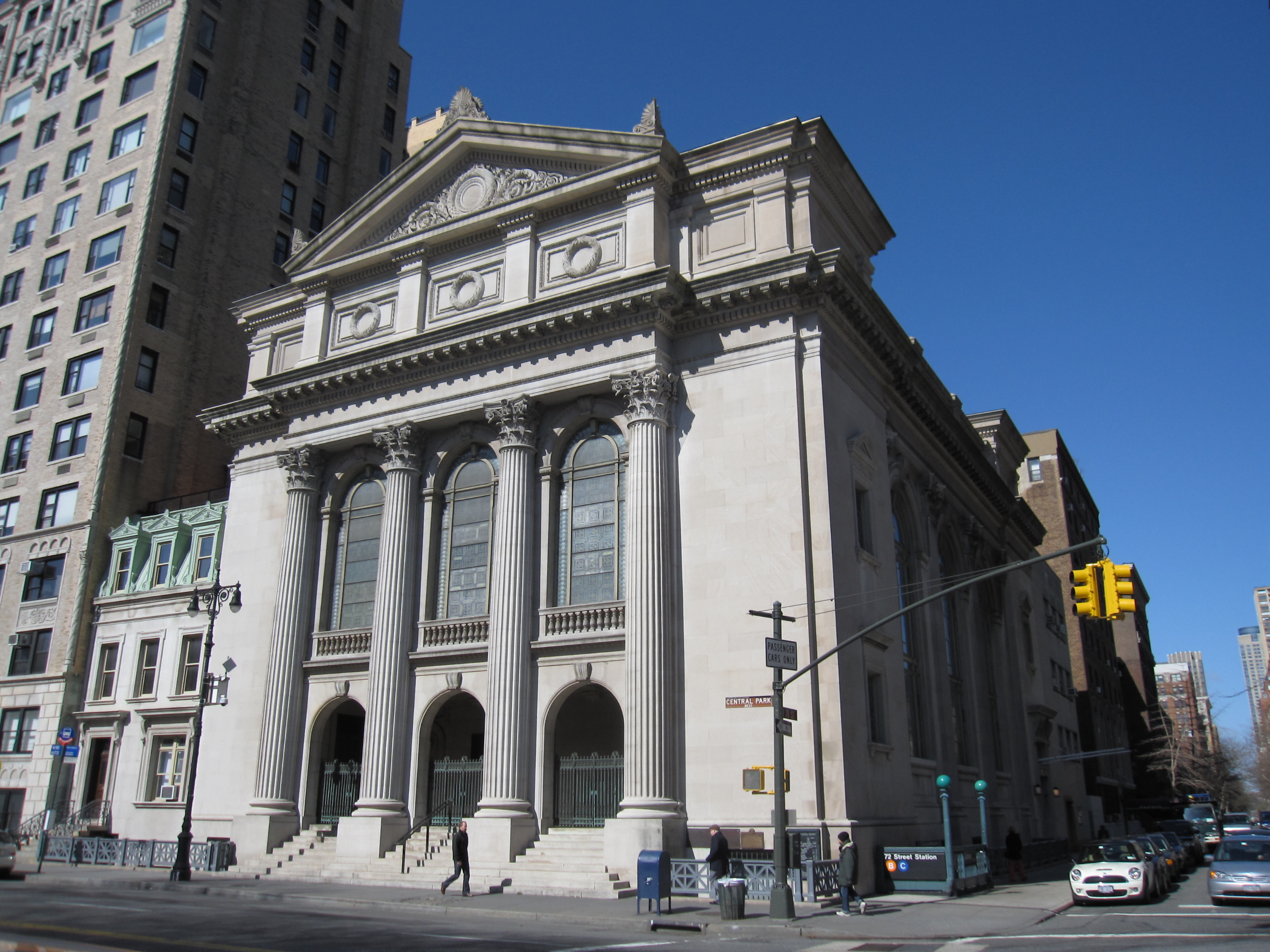
Shearith Israel moved to its fifth and current home, a magnificent building at 70th Street and Central Park West (above), in 1897. Uriah Levy’s great grandfather, David Machado—who married Maria Caetana Nunez, the daughter of the family patriarch Dr. Samuel Nunez—moved from Savannah, Georgia, to New York to serve as hazzan of Shearith Israel in the 1740s. A hundred years later Uriah Levy joined the Congregation. His nephew L. Napoleon Levy (a brother of Jefferson Levy) served as president of Shearith Isreal in the 1890s. I had the pleasure of doing a talk there on the Levy Family and Monticello in March of 2002.

The congregation that would make its home in Touro Synagogue—which does not have a Nunez/Phillips/Levy family connection—was founded in 1658 as Nephuse Israel, also by Sephardic descendants of Jewish families who first went to the Caribbean to escape certain death during the Spanish Inquisition. The current Touro Synagogue was dedicated in 1763, making it the oldest in the nation. 

Touro—which was named for two of its congregants—recently won a legal battle with Shearith Israel in the District Court of Providence. It had to do with Touro’s proposed sale of an extremely valuable pair of 18th century silver ornaments called rimonim that sit on top of Torahs. Touro wanted to sell the finials to raise millions to keep the synagogue operating.

Shearith Israel argued that it owned not just the rimonim, but also the Touro synagogue itself. That’s because many of Touro’s congregants had moved to New York and joined Shearith Israel in the late 1700s and early 1800s. They closed the building, and took the keys to Touro and many other objects, including Torahs and rimonim, with them to Shearith Israel.

The objects were returned about a hundred years later when Rhode Island experienced a large wave of Jewish immigration from Eastern and Central Europe and the long-dormant Touro reopened.


“The central issue here is the legacy of some of the earliest Jewish settlers in North America, who desired to make Newport a permanent haven for public Jewish worship,” Judge John J. McConnell wrote in his decision, in which he ruled that Shearith Israel had been the trustee—not the owner—of Touro.

For more info on the dispute, here's an article in The New York Times.

EVENTS:  
·        Saturday, June 11  – 11:30 a.m. – 4:00 p.m. book signing of Saving Monticello at the Gift Shop at Thomas Jefferson’s Monticello in Charlottesville, Virginia.
  • Tuesday, June 14 10:20 a.m. talk on Flag: An American Biography, Brethren Village Retirement Community “Lunch & Learn” event, 3001 Lititz Pike, Lancaster, Pennsylvania.
  • Saturday, June 18 – 11:00 a.m. – 4:00 p.m. book signing of Saving Monticello, Flag, Desperate Engagement, Lafayette, and What So Proudly We Hailed at “Eat Local, Read Local” event, Cascades Library, Potomac Falls, Virginia
  • Sunday, June 19 – 10:45 a.m. talk on Flag and book signing at LZ Maryland Writers’ Hootch, Maryland State Fairgrounds, Timonium, Maryland
  • Saturday, June 25 – Luncheon talk on Lafayette and book signing for Virginia Sons and Daughters of the Pilgrims, Charlottesville, Virginia. 


Please email me if you’d like to arrange an event for Saving Monticello—or for any of my other books, including What So Proudly We Hailed and Lafayette: Idealist General, my concise bio of the Marquis de Lafayette—at marc527psc@aol.com  For more details on other upcoming events, go to http://bit.ly/SMOnline  That’s the “Author Events” page on my website, www.marcleepson.com

Facebook, Twitter: If you’re on Facebook, please send me a friend request. If you’re on Twitter, I’d love to have you as a follower.

Gift IdeasIf you would like a personally autographed, brand-new paperback copy of Saving Monticello, e-mail me at Marc527psc@aol.com Or go to this page of my website: http://marcleepson.com/signedbooks.html to order copies through my local bookstore, Second Chapter Books in Middleburg, Virginia. We also have copies of Desperate Engagement, Flag, Lafayette, and What So Proudly We Hailed.  

Wednesday, May 4, 2016

May 2016


Saving Monticello: The Newsletter

The latest about the book, author events, and more

Newsletter Editor - Marc Leepson


Volume XIII, Number 5                                                                     May 1, 2016


‘BY DAWN’S EARLY LIGHT’:  That’s the name of an exhibit, subtitled “Jewish Contributions to American Culture from the Nation’s Founding to the Civil War,” on view at the Princeton University Art Museum through June 14.
The exhibit, which opened in February, contains more than 170 objects—novels, poems, books, maps, religious works, paintings, photographs, newspapers, and scientific treatises—produced by, or relating to, Jews in the Early Republic.
The items are on loan from museums, synagogues, and private collections, including many objects from the collection of Princeton alum Leonard L. Milberg. That includes this 1831 portrait of strikingly beautiful Rebecca Gratz (above) by the famed, Philadelphia-based portrait painter Thomas Sully (1783-1872).
Several of the items in the exhibit are connected to Phillips/Levy family. That includes the famous June 27, 1787, letter written by the noted Philadelphia physician (and signer of the Declaration of Independence) Dr. Benjamin Rush to his wife, in which he described the June 1787 wedding of Uriah Levy’s mother and father, Rachel Phillips and Michael Levy in Philadelphia. Rush’s description of their wedding is thought to be the first written record of a Jewish wedding ceremony in the New World.

Family tradition holds, by the way (as I wrote in Saving Monticello), that George Washington, then president of the Constitutional Convention in Philadelphia, attended the wedding. Other family stories claim that Washington had danced at the wedding of Uriah Levy’s grandparents, Jonas Phillips and Rebecca Machado back in 1762.

Also in the Princeton exhibit is another important letter in the annals of Jewish-American history. It was written on May 28, 1818, by Thomas Jefferson to Uriah Levy’s second cousin Mordecai Manuel Noah—a diplomat and journalist, and the first American-born Jewish person to become nationally prominent. Earlier that year Noah had given a speech at Congregation Shearith Israel in New York, a copy of which made its way to Monticello.

Jefferson wrote to Noah on May 28, 1818, expressing his views on freedom of religion and his condemnation of anti-Semitism. Jefferson wrote that he had read Noah’s speech “with pleasure and instruction, having learnt from it some valuable facts in Jewish history which I did not know before.”

Judiasm, Jefferson said, “by its sufferings has furnished a remarkable proof of the universal spirit of religious intolerance inherent in every sect, disclaimed by all while feeble, and practiced by all when in power.Our laws have applied the only antidote to this vice, protecting our religious, as they do our civil rights, by putting all on an equal footing. But more remains to be done, for although we are free by the law, we are not so in practice.... I salute you with great respect and esteem.”

The letter is in the collection of the Yeshiva University Museum.

           
The exhibit’s lavishly illustrated catalog, with thirteen scholarly essays, is being sold at the Art Museum Store. For more info, go to artmuseum.princeton.edu/art/exhibitions/1655


EVENTS:  I just sent in my manuscript for my next book, a biography of Barry Sadler, “The Ballad of the Green Berets” guy, which will come out in March of next year. I soon will be doing more speaking on my books, including Saving Monticello.

Just one event this month, on Sunday, May 15, at the Manassas Museum in Manassas, Virginia, a talk on Lafayette at 1:30 p.m. It’s free and open to the public. For info, go to manassascity.org/1657/Free-Book-Talks


Please email me if you’d like to arrange an event for Saving Monticello—or for any of my other books, including my Francis Scott Key, biography, What So Proudly We Hailed, and Lafayette: Idealist General, my concise bio of the Marquis de Lafayette—at marc527psc@aol.com  For more details on other upcoming events, go to http://bit.ly/SMOnline  That’s the “Author Events” page on my website, www.marcleepson.com

Facebook, Twitter: If you’re on Facebook, please send me a friend request. If you’re on Twitter, I’d love to have you as a follower.

Gift IdeasIf you would like a personally autographed, brand-new paperback copy of Saving Monticello, e-mail me at Marc527psc@aol.com Or go to this page of my website: http://marcleepson.com/signedbooks.html to order copies through my local bookstore, Second Chapter Books in Middleburg, Virginia. We also have copies of Desperate Engagement, Flag, Lafayette, and What So Proudly We Hailed.  

Saturday, April 2, 2016

April 2016


Saving Monticello: The Newsletter

The latest about the book, author events, and more

Newsletter Editor - Marc Leepson


Volume XIII, Number 4                                                                     April 1, 2016


HEMINGS FAMILY TOUR:  Although Saving Monticello begins on the day that Thomas Jefferson died (July 4, 1826), people regularly ask me what I think about the relationship between Jefferson and Sally Hemings, the famed enslaved woman. I always tell them that Saving Monticello is a history of what happened to Monticello after Jefferson’s death and I therefore do not cover the controversial question of their relationship in the book.

That said, I do provide a brief look at the house’s origins and Thomas Jefferson’s last years (1809-26) in the book. I mention that in a codicil to his will, Jefferson granted freedom to five of his enslaved men who had learned trades, all of whom were members of the Hemings family: Joe Fossett, Burwell Culbert and John, Madison and Eston Hemings. All five of the newly free men were also given houses. I also note that Burwell Culbert, Joe Fossett, and John Hemings joined with family members at Jefferson’s bedside during the last week of his life.

There was a lot more to the Hemings family at Monticello, of course. The newest special tour at Monticello, the Hemings Family Tour, helps visitors learn about seven members of the family, including Sally. Starting today, April 1, 2016, Monticello will offer this one hour, forty-five minute tour on Fridays, Saturdays, and Sundays at 1:45 p.m through November. The cost is $27 per person and the tour includes the standard first-floor house tour.


 This is a small-group tour that takes visitors into the house and along Mulberry Row, interpreting life in the house and plantation through the stories of the Hemings family members.

“Through their experiences, you will learn about the challenges faced by members of this large, important family at Monticello as they negotiated to maintain family ties and strove for freedom,” the Monticello web suite notes. “The tour will also highlight how the Hemingses straddled the color line, defying the stark racial dividing lines imposed in American slavery.” 

This special tour is another example of the admirable job the Thomas Jefferson Foundation, which bought Monticello from Jefferson Levy in 1923, has done in recent decades documenting the lives of the enslaved families at Monticello. The Hemings family is among the best documented—not just at Monticello, but anywhere in the U.S.

Researchers at Monticello have, as the website notes, done a massive amount of documentary research, archaeological analysis and oral histories of Hemings descendants, and have come up with “related narratives of struggle, survival, and family bonds across more than three generations.” For more info on the tour, go to http://bit.ly/HemingsTour

The Foundation also has just made available a free new app, “Slavery at Monticello,” that complements the tour. For info on that, go to http://bit.ly/Hemingsapp

EVENTS:  I’m wrapping up my next book, the biography of Barry Sadler, “The Ballad of the Green Berets” guy, which will come out in March of next year. I soon will be doing more speaking on my books, including Saving Monticello. Here’s what’s afoot this month:

·        Monday April 4 – 11:00 a.m. Pacific time appearance on “The Mike Slater Show” on KFMB radio in San Diego, discussing What So Proudly We Hailed, my biography of Francis Scott Key
·        Saturday, April 30 Talk on Francis Scott Key for the Cameron Parish DAR Chapter’s annual meeting, Ashburn, Virginia


Please email me if you’d like to arrange an event for Saving Monticello—or for any of my other books, including What So Proudly We Hailed and Lafayette: Idealist General, my concise bio of the Marquis de Lafayette—at marc527psc@aol.com  For more details on other upcoming events, go to http://bit.ly/SMOnline  That’s the “Author Events” page on my website, www.marcleepson.com


 Facebook, Twitter: If you’re on Facebook, please send me a friend request. If you’re on Twitter, I’d love to have you as a follower.

Gift IdeasIf you would like a personally autographed, brand-new paperback copy of Saving Monticello, e-mail me at Marc527psc@aol.com Or go to this page of my website: http://marcleepson.com/signedbooks.html to order copies through my local bookstore, Second Chapter Books in Middleburg, Virginia. We also have copies of Desperate Engagement, Flag, Lafayette, and What So Proudly We Hailed.  


Thursday, March 3, 2016

March 2016


Saving Monticello: The Newsletter

The latest about the book, author events, and more

Newsletter Editor - Marc Leepson


Volume XIII, Number 3                                                                     March 1, 2016

THE TERRACE RAILING: The public tour of Monticello ends on the one of the two long terraces that extend from the north and south sides of the building. The Chinese Chippendale-inspired white wooden railings around those terraces were installed by the Thomas Jefferson Foundation (then known as the Thomas Jefferson Memorial Foundation) around 1940.

Ten years ago, the Foundation took a look at the weathered railings and decided they had to go. But instead of repairing the railings, the Foundation decided to reconstruct new ones using a detailed design that Thomas Jefferson drew up (and that still survives in the Thomas Jefferson Papers at the Massachusetts Historical Society) in 1824, two years before he died.


Those railings—which probably were the second ones that Jefferson designed for the terraces (the first designs are lost and most likely never were used)—call for vertical bars held in place by horizontal rails, a traditional English pail or picket fence design.

Although no one knows for sure, the best guess is that they were painted dark green. That’s the same color as the recently reconstructed window blinds in the house. The Monticello Restoration Department carefully examined three 1925 paintings of Monticello in which the railings are seen in a dark color, although it’s difficult to tell if it is green. But the Foundation has a fragment from one of the window blinds that confirms that they were green. The photo below is a sample of what the new railings will look like. 


 When I wrote Saving Monticello, I dealt only briefly with the terraces. What I found of note was that the terraces (and their railings) had all but rotted away by the time Uriah Levy purchased the house from James Turner Barclay in 1834. That’s because the house and grounds had been going downhill due to what we would call today an extreme lack of preventive maintenance during Jefferson’s declining years and Barclay’s 1831-34 ownership. 

I contacted Susan Stein, the Richard Gilder Senior Curator & Vice President for Museum Programs, and Gardiner Hallock, the Robert H. Smith Director of Restoration at Monticello, to see if they could shed some historical light on the terrace railing situation during the 90 or so years when the Levy family owned Monticello (from 1834-1923). Susan and Gardiner told me that it’s tough to say when the Jefferson railings were removed and what the railings would have looked like during Uriah Levy’s ownership—if Levy even had installed railings on the terraces.

Since there are no photographs (the earliest one was taken in the early 1870s), all we have to go on is an 1830s engraving that shows a Chinese-inspired railing on the North Terrace. However, as Gardiner told me, that image “is not 100 percent accurate because some elements are left off and the artist added some features, like second floor windows.” The best guess is that, as I wrote in the book, the terraces—railings and all—had been gutted and were gone during UPL’s time (1834-62) and during the next seventeen years when the family fought over his will and Monticello was under the care of Joel Wheeler, the caretaker who didn’t take very good care of the place.

As for Jefferson Levy’s ownership (1879-1923), photographs from 1912 show “short sections of horizontal railings at the ends the covered passages,” Gardiner said. “Since the roof over the North Dependency was missing at this point, I think these rails were a safety feature meant to keep visitors from hurting themselves.”

A 1924 photo, though, shows what looks like a Chinese railing on the North Terrace. The best guess is that Monticello’s restoration guru, Fiske Kimball, got rid of those railings, since he construed his job as erasing all traces of the nearly 90-year ownership of Monticello by the Levy family.

As I wrote in Saving Monticello, “The Foundation did not want [Monticello] to be a Levy shrine,” the Foundation’s Fred Kuper told the author Charles Hosmer. Therefore, as Hosmer put it, “everything having to do with the Levys was removed.” That included bathrooms, a bath tub and a stairway installed by Jefferson Levy, along with the roof dormers he added, and an enormous amount of furniture and furnishings that Levy conveyed to the Foundation with the sale of the property—and the Chinese terrace railings.

EVENTS:  Here’s a rundown on my March events. I’m wrapping up my next book, the biography of Barry Sadler, “The Ballad of the Green Berets” guy, and will be getting back into doing more talks on my books. 


Here’s a rundown on my March events:
·        Friday, March 11 – morning talk on Francis Scott Key at the 120th Virginia State DAR Conference at the Downtown Richmond Marriott Hotel. 
·        Saturday, March 19 morning workshop on researching nonfiction books at the Samuels Authorcon event at the Samuels Library in Front Royal, Virginia. For info, email Bill Powell at bill@billpowell.org
·        Monday, March 21 – afternoon talk on Francis Scott Key at the Glebe in Daleville, Virginia
·        Monday, March 28 – evening talk on Francis Scott Key at the Willard Hotel in Washington, D.C. for a private event.


Please email me if you’d like to arrange an event for Saving Monticello—or for any of my other books, including What So Proudly We Hailed, my Francis Scott Key biography, and Lafayette: Idealist General, my concise bio of the Marquis de Lafayette—at marc527psc@aol.com 

For more details on other upcoming events, go to http://bit.ly/SMOnline  That’s the “Author Events” page on my website, www.marcleepson.com

Facebook, Twitter: If you’re on Facebook, please send me a friend request. If you’re on Twitter, I’d love to have you as a follower.

Gift IdeasIf you would like a personally autographed, brand-new paperback copy of Saving Monticello, e-mail me at Marc527psc@aol.com Or go to this page of my website: http://marcleepson.com/signedbooks.html to order copies through my local bookstore, Second Chapter Books in Middleburg, Virginia. We also have copies of Desperate Engagement, Flag, Lafayette, and What So Proudly We Hailed.